
A YouTube Education
In art, science, philosophy, music and more

YouTube is now second only to the BBC as the most popular broadcaster in the UK.
I often write disparagingly about the modern internet’s inexorable slide towards video but I also have to (grudgingly) concede that I have learned an awful lot on YouTube over the years.
In my teens it helped introduce me to poetry, philosophy music and art. I thought I would make a list of videos which form a kind of curriculum in the humanities (and a tiny bit in the sciences).
This list is partial and biased towards my own interests. I’m sure I’ve missed many things (I’m not into animal documentaries but there must be one of those good David Attenborough-style things with baboons etc somewhere) so please send me your favourite educational YouTube videos in the comments.
Here is a YouTube education. Or my version of one.
Culture: Civilisation by Kenneth Clark
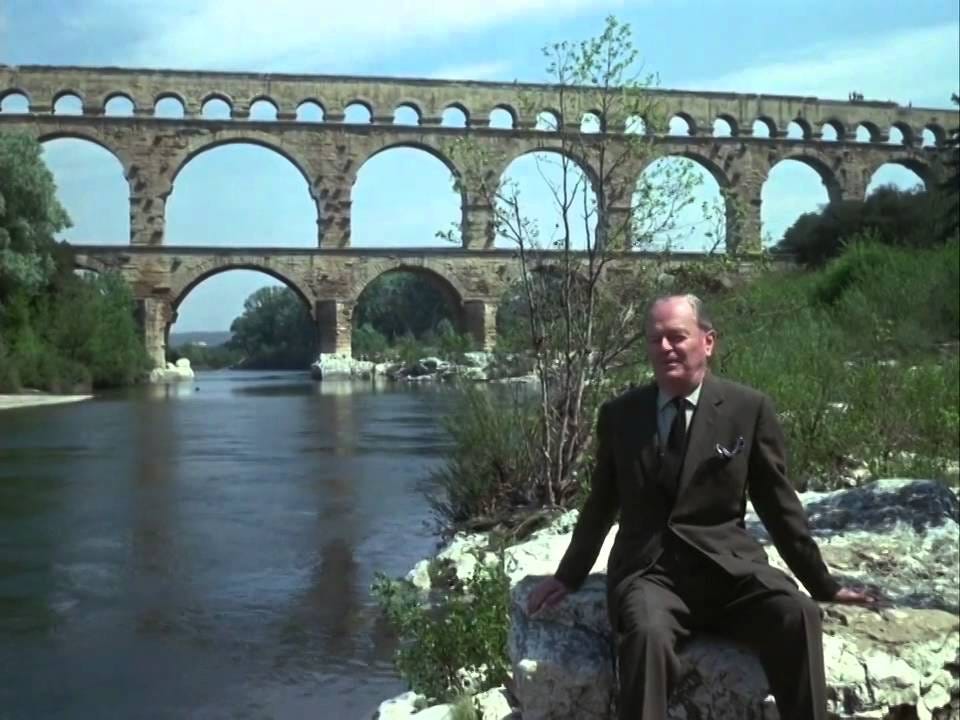
The list has to start here. Kenneth Clark’s epic Civilisation is possibly the greatest documentary series ever made. You are taken through the whole history of Western culture from the middle ages to the present in thirteen episodes.
It’s beautifully shot, beautifully written and full of confident sweeping judgements. I worshipped it in my teens. My favourite bits are the episode on the Florentine Renaissance (you can tell Clark is in his element there) and the section of episode nine on Bavarian pilgrimage churches in which Clark just shows shots of rococo religious interiors and plays Bach at you for seven minutes. You couldn’t do that on TV nowadays.
I can see now that Civilisation has its absurdities: the mannered presentation-style, the reductive opinions, the un-woke and old-fashioned take on history (Islam is written off in a couple of lines; Spain barely features etc). But I still think it’s marvellous. And often genuinely profound.
Here is Clark on the two great enemies of civilisation, fear and boredom:
Fear of war, fear of invasion, fear of plague, fears that make it simply not worthwhile constructing things, or planting trees or even planning next year's crops. And fear of the supernatural, which means that you daren't question anything or change anything. The late antique world was full of meaningless rituals, mystery religions, that destroyed self-confidence. And then boredom. The feeling of hopelessness which can overtake people with a high degree of material prosperity.
If you want an overview of Western culture this is the best place to start.
You can watch the whole series starting here.
Culture: Ways of Seeing by John Berger
Ways of Seeing was made by the art critic John Berger as a riposte to Civilisation. Berger’s aim was to take apart what are in his view the submerged assumptions and ideologies of the old-fashioned Kenneth Clark-style view of Western civilisation and its visual arts. In fact it’s much more interesting than that. The series is a kind of polemical video essay on the meaning and interpretation of culture. You don’t have to agree with it all to find it thrillingly intelligent and beautifully-written. Every line Berger delivers is alive with thought. When I was a student I thought it was the cleverest thing I’d ever seen and I still find it electrifying to watch.
My favourite episode is the final one, on advertising:
Publicity is a language which is always being used to make the same general proposal. Within publicity, choices are offered between this cream and that cream, that car and this car, but publicity as a system only makes a single proposal.
It proposes to each of us that we transform ourselves, or our lives, by buying something more. This more, it proposes, will make us in some way richer - even though we will be poorer by having spent our money.
Publicity persuades us of such a transformation by showing us people who have apparently been transformed and are, as a result, enviable. The state of being envied is what constitutes glamour. And publicity is the process of manufacturing glamour.
Plus Berger’s technicolour shirts are an artistic marvel in themselves:
Biology: Richard Dawkins and Steven Pinker on evolution, language and the brain
There is not much science on this list because I think classic science programmes tend to age less well. But this is one of my favourite videos on YouTube: Steven Pinker and Richard Dawkins talking to each other about evolution. They are both grown men but they have such a disarmingly boyish excitement about science. I like how they are both made to awkwardly stand up for the whole video.
Philosophy: Talking Philosophy with Bryan Magee
The philosopher Bryan Magee is one of the best popularisers of an academic subject ever to have lived. His book on Schopenhauer is one of my all-time favourite non-fiction books and the first book that made me really excited about philosophy (it’s way less forbidding than it looks when you Google it).
In the seventies the BBC allowed him to make a series of what in hindsight seem like absurdly highbrow programmes about philosophy. It’s quite amazing. His guests include AJ Ayer, Noam Chomsky and Isaiah Berlin. His conversation with Iris Murdoch is particularly good. I love her incredibly old-school no-nonsense manner and defiantly un-telegenic dress sense.
Art history: The Shock of the New
Regular readers are probably familiar with my obsession with the art critic Robert Hughes who I think is the greatest critic of the second half of the twentieth century (his portrait hangs in my living room). His series about modern art The Shock of the New is probably the best-written television ever made.
I think this is stunning on Van Gogh’s paintings:
Everything Van Gogh saw was was swept up in a current of energy; everything is made from the same plasma, the moon comes out of eclipse, the stars blaze, the sky heaves like the ocean, and the cypresses move with it. Van Gogh’s cypresses are like thick dark lightning conductors grounding the energy of the sky in the earth. They are alive as no painted tree had ever been and no real cypress could be.
That’s from episode six but it’s worth starting at the beginning, here:
Literature: John Betjeman and Philip Larkin
John Betjeman’s programme about Philip Larkin is probably my favourite documentary about a poet. It’s beautifully shot and completely faithful to the mood of Larkin’s poems.
Betjeman is a very sympathetic and intelligent interpreter and reader of Larkin’s poets and you can tell the two men get along and like each other.
I also find Larkin a weirdly compelling screen presence. Quite amazing that we have such a great poet on film.
Literature: Sylvia Plath reads her poems
The two poets I most love to hear reading their own work are Sylvia Plath and WH Auden. There is lots of Plath on YouTube. She has such a wonderful voice: that highly strung transatlantic twang that fits perfectly with her poems. At university my friends and I used to compete to do impressions of her reading ‘Daddy’:
You do not do, you do not do
Any more, black shoe
In which I have lived like a foot
For thirty years, poor and white,
Barely daring to breathe or Achoo.
Music: Leonard Bernstein’s Young People’s Concerts
If you’re new to classical music and looking to learn how to appreciate it I think the best place to start is this series of programmes made by Leonard Bernstein to introduce the subject to a young audience.
So much of classical music is mysterious if you don’t play an instrument. Nobody at school ever told me what a symphony was or how one worked or what you should learn to listen out for if you want to enjoy one.
I was lucky to discover these programmes. Bernstein delivers a little lesson about an aspect of music then turns around to the full orchestra waiting patiently behind him to conduct an illustrative example.
This episode, What Makes Music Symphonic, is a great place to start:
Opera: Wagner’s Ring
The other thing that really got me into music in my pretentious teens was the discovery that you can watch the whole of Wagner’s Ring Cycle on YouTube for free. The 1976 production at Bayreuth conducted by Pierre Boulez and directed by Patrice Chereau is an extremely intelligent and accessible one — especially for those put off by the fat ladies in horned helmets aspect of Wagner.
It is based on George Bernard Shaw’s famous Marxist reading of Wagner in his essay The Perfect Wagnerite (accessible here and a genuinely useful guide to the operas): the gods are feckless aristocrats threatened by the advent of industry and the rise of the bourgeois. I’m persuaded that this really is a lot of what really is going on underneath the surface in the Ring Cycle.
The production doesn’t overdo the political stuff and it is extremely dramatically effective. At the beginning of Das Rheingold, the curtain rises on Rhinemaidens who are prostitutes frolicking on an hydroelectric dam — this sounds naff and caused a riot when the production was first staged but in hindsight its obvious its amazing. It’s not a gimmick; it all somehow adds up to a coherent and compelling dramatic world.
The whole thing is online on HD here:
If you want shorter extracts some good places to start are the entry of the gods into Valhalla, Wotan’s farewell to Brunnhilde, Siegmund and Sieglinde’s love scene and the dramatic finale to Gotterdammerung.
Architecture: Nairn Across Britain
I love the architecture critic Ian Nairn — probably the most thoughtful and principled critics of the shoddy and ugly buildings that were thrown up in Britain in the sixties and after. He made a series of brilliant documentaries about architecture. His programmes aren’t about gawping at grand mansions or gushing over beautiful churches. Nairn is interested in the less glamorous side of architecture: how people live with it, how it and how it shapes their lives. In his documentaries he visits ordinary places and comments on the buildings there. What does it look like? What’s changed? Why was it built this way?
In the end, his programmes are just as much about Britain, its people as they are about buildings.
He also has one of the saddest voices I’ve ever heard. There’s something strangely moving about his downbeat intonation. And it’s quite fitting for his subject of course.
Brilliant list - agree with all James's inclusions. One I would add - Ronald Eyre's superb series about religion (or more accurately the meaning of life and why it matters) The Long Search. A few excerpts on YouTube. It is amazing, everyone should watch it - Eyre was a sceptic and a perfect explainer of complex idea - the ideal guide through thousands of years of human thought.
I too learned so much from Civilization, got the book, watch it over and over again. Still wonderful. I am so glad that James included The Shock of the New, which is revelatory, and Robert Hughes such a dry and witty performer - perfect contrast to Kenneth Clark. And Lennie on Music - he introduced me to Mahler as a kid and has opened up so many hours of amazement, shuddering and delight. The Boulez/Chereau Ring blew me away and got my Wagner habit blissfully started.
Love this stuff - I read James in the Times, but these regular ruminations are even better.
This is incredible- the only thing I’ve used youtube for is Pilates beginners work out. I’m going to explore. Oh and probably start my own channel on there.